


By using our website, you agree to the use of cookies as described in our Cookie Policy
Security System Tips & Info in Fort Worth
Choosing Security Cameras for Your Fort Worth Business
Most Fort Worth business owners think security cameras are just about catching thieves. Point, click, record. But the right system does more than that — and if you cheap out or guess wrong, you're leaving gaps that matter. Cameras aren't just hardware. They're your after-hours staff, your liability shield, and your first line of defense when something goes sideways.
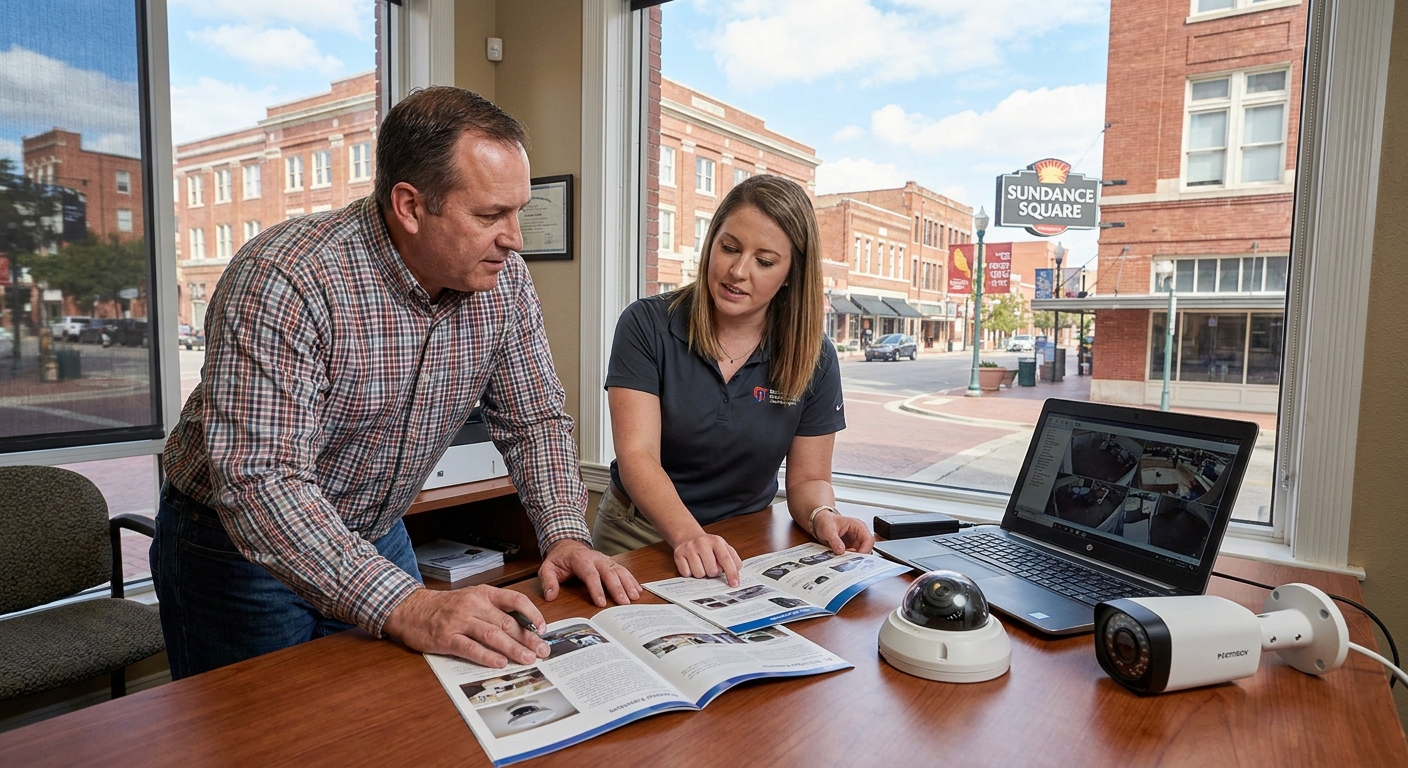
So here's what matters. If you're installing cameras to protect something real — inventory, equipment, people — don't treat it like a weekend project. Every angle should be intentional. Every camera should have a purpose. And every decision should be grounded in what you're actually trying to secure, not just what looked good in the ad.
Figure Out What You're Really Protecting
You can't pick the right cameras until you know what's at risk. Walk your property and map out the weak spots — back doors, loading zones, cash registers, parking lots. Pay attention to blind corners and places where someone could slip in unnoticed. The goal isn't to cover every square inch. It's to cover the places that cost you money or put people in danger.
Think about more than theft too. Are you monitoring employee safety? Tracking who comes and goes? Protecting against false liability claims? Your coverage plan changes depending on the answer. A retail storefront needs different eyes than a warehouse or a multi-tenant office building. Many businesses also integrate access control systems to manage who enters specific areas during business hours.
Not All Cameras Do the Same Job
Cameras come in different shapes for different reasons. Dome cameras sit flush and subtle — good for indoor areas where you want coverage without drawing attention. Bullet cameras are long and obvious, built for outdoor reach and acting as a visual deterrent. PTZ models let you pan, tilt, and zoom remotely, which works great for large open areas like parking garages or loading docks.
Then there's the tech side. IP cameras run over your network and let you pull footage from anywhere. Wireless setups skip the cable mess but need strong signal coverage. Analog systems are cheaper upfront but limited on resolution and remote access. Match the tool to the task, or you'll end up with expensive blind spots.
The Features That Actually Matter
Resolution isn't optional anymore. If you can't make out a face or a license plate, the footage is useless. Go with at least 1080p, and push for 4K if you're covering large areas or need to zoom in post-incident. Night vision is non-negotiable for any camera facing outdoors or operating after hours. Infrared LEDs handle low light without turning your building into a floodlight zone.
Weatherproofing protects your investment. Fort Worth gets hot, stormy, and unpredictable. Outdoor cameras need an IP rating that can take the heat and the wet. Field of view determines how many cameras you actually need — a wide-angle lens covers more ground but sacrifices detail at distance. Storage is the other half of the equation. Local DVRs give you control. Cloud storage gives you access from anywhere but comes with monthly fees.
- Resolution of 1080p minimum, 4K preferred for high-traffic zones
- Infrared night vision for round-the-clock recording
- Weatherproof ratings for outdoor installations
- Wide-angle lenses to reduce camera count without losing coverage
- Remote access via mobile app or desktop portal
Privacy Rules You Can't Ignore
Texas law doesn't mess around when it comes to where you can point a camera. You can't record in bathrooms, changing rooms, or anywhere with a reasonable expectation of privacy. Even in common areas, you need visible signage letting people know they're being recorded. Fail to post those signs or install a camera in the wrong spot, and you're opening yourself up to lawsuits.
If you're recording audio, the rules get stricter. Texas is a one-party consent state, but workplace recordings can still create liability if employees aren't informed. Keep it simple — focus on video, post clear notices, and consult local counsel if you're unsure. The goal is protection, not problems.
DIY Installs Usually Cost More Later
Mounting a camera isn't rocket science. Running cable, configuring network access, setting up motion zones, and optimizing angles? That's where most DIY setups fall apart. You end up with cameras pointed at the ground, dead zones in critical areas, or systems that don't talk to each other.
Professional installers assess your layout, recommend placement, handle the wiring, and configure remote access so it actually works. They also know local building codes and can pull permits if needed. The upfront cost is higher, but you're paying for a system that functions the way it's supposed to — not one you're troubleshooting at 2 a.m. after an incident. Many businesses also benefit from structured cabling solutions that support both surveillance and network infrastructure.
- Site assessment to identify optimal camera placement
- Professional-grade mounting and cable management
- Network configuration for remote viewing and alerts
- Compliance with local codes and permitting requirements
- Ongoing support and system maintenance options
Build a Budget That Reflects Reality
Cheap cameras break, lose signal, or deliver grainy footage that's worthless when you need it. Quality systems cost more upfront but last longer and perform when it counts. Factor in the full picture — hardware, installation, storage, and any subscription fees for cloud access or monitoring services.
Don't forget ongoing costs either. Some systems need annual licenses. Others require periodic maintenance or firmware updates. Cloud storage scales with how much footage you keep and how long you retain it. If you're financing the system, make sure the monthly hit fits your operating budget without creating cash flow issues.
- Hardware costs based on camera count and feature set
- Professional installation fees and site prep
- Monthly or annual cloud storage subscriptions
- Maintenance agreements and warranty coverage
- Licensing fees for advanced software features
Where Most Businesses Go Wrong
Picking cameras based on price alone is the fastest way to waste money. You'll end up replacing the system in two years or missing critical footage because the resolution was garbage. Another mistake? Installing cameras without a plan. Random placement creates blind spots and overlapping coverage that doesn't add value.
Then there's the storage trap. Some businesses record everything at max resolution and run out of space in days. Others set retention too short and lose footage before they realize they need it. Balance quality with capacity, and set retention policies that match your industry and risk profile. If you operate in a high-risk sector, 90 days of storage isn't overkill — it's smart. For comprehensive security, many businesses also integrate burglar alarm systems alongside their camera setups.
- Prioritizing price over performance and reliability
- Random camera placement without strategic coverage planning
- Insufficient storage capacity or retention periods
- Ignoring network bandwidth requirements for IP cameras
- Skipping regular maintenance and firmware updates
When to Bring in the Pros
If your property has multiple entry points, high-value assets, or a mix of indoor and outdoor zones, you're past DIY territory. A security consultant will assess your risks, recommend a system that fits your layout, and handle the install so it's done right the first time. They'll also train your team on how to pull footage, set up alerts, and troubleshoot basic issues. Professional surveillance systems are designed to integrate seamlessly with other security measures and provide reliable performance when you need it most.
It's not just about avoiding mistakes. It's about building a system that scales as your business grows, integrates with other security measures, and holds up under scrutiny if you ever need the footage in court or for an insurance claim. The best systems aren't the flashiest — they're the ones that work every single time you need them. For businesses looking to secure valuable assets, adding safe and vault solutions provides an additional layer of protection alongside camera surveillance.
Cameras That Work When It Counts
Installing security cameras isn't about checking a box. It's about protecting what you built and making sure you have eyes on what matters most. The businesses that get it right don't cut corners on coverage, quality, or professional guidance. They invest in systems that deliver real security, not just the illusion of it. Exploring the full range of security services available can help you create a comprehensive protection strategy for your Fort Worth business.
Whether you're securing a storefront in downtown Fort Worth or a multi-building operation in the suburbs, the right camera system pays for itself the first time it stops a loss, settles a dispute, or gives you peace of mind after hours. Do it right the first time, and you won't be doing it again.
Let’s Secure Your Business Together
We know how much your business means to you, and we’re here to help you protect it with a camera system that’s built for real-world risks—not just marketing promises. Let’s talk about your security goals and design a solution that fits your needs, your property, and your budget. Call us at 888-477-5019 or get a free quote today, and let’s make sure your business is covered from every angle.
‹ Back
Recent Posts
-

Choosing Security Cameras for Your Fort Worth Business
October 20, 2026
-
Signs Your Fort Worth Business Burglar Alarm Needs an Upgrade
October 6, 2026
-
Access Control Systems in Fort Worth for Managing Employee Entry
September 22, 2026
-
-