


By using our website, you agree to the use of cookies as described in our Cookie Policy
Security System Tips & Info in Fort Worth
How Dock Cameras Protect Fort Worth Waterfront Businesses
Most waterfront operators think security is just about locks and lights. Motion sensors, maybe. But the real vulnerability isn't at the front door—it's at the dock. Where inventory sits exposed. Where foot traffic blends with trespassers. Where a single incident can cost you product, reputation, or worse. Cameras don't just record—they create accountability. And if you're running a marina, restaurant, or distribution operation on the water, that accountability is the difference between staying insured and getting flagged.
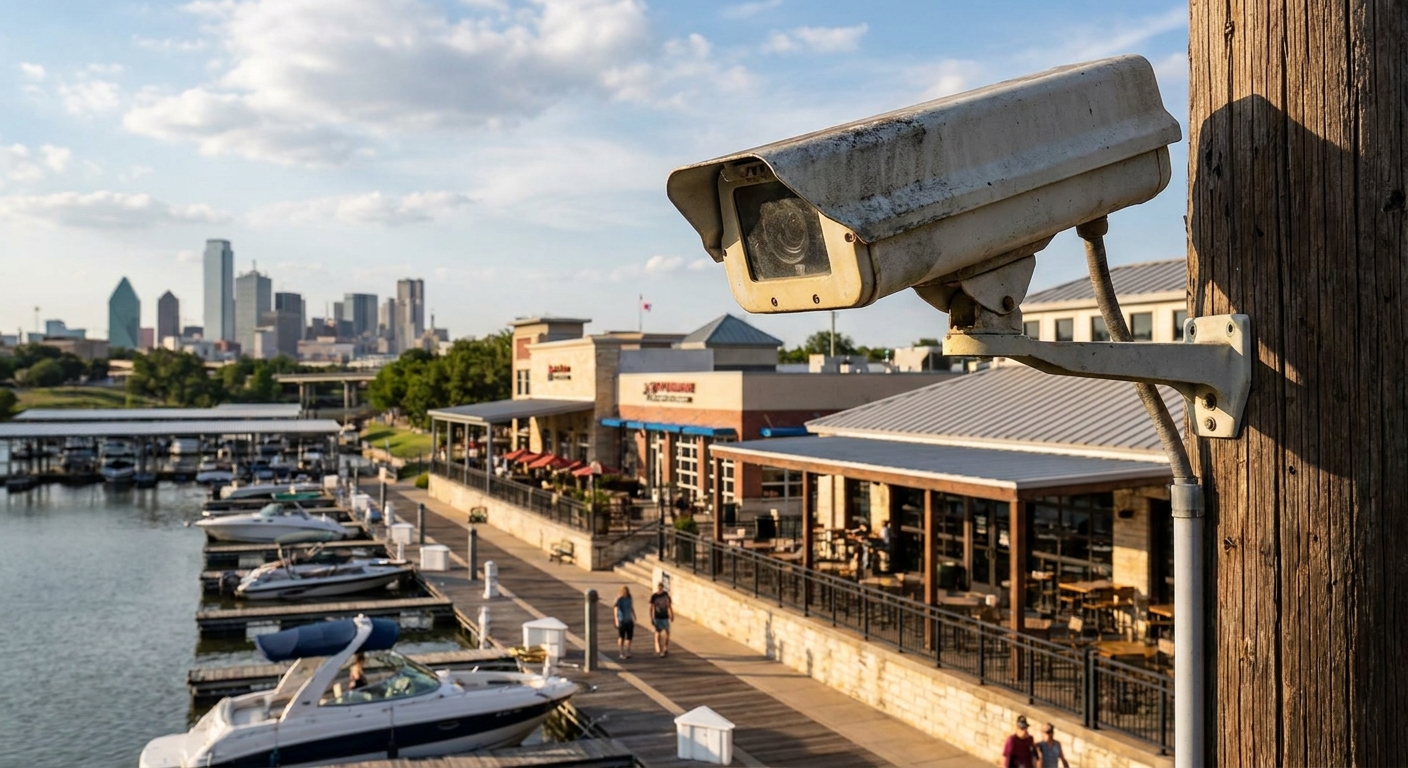
Here's what matters. If you're operating near the water, visibility is everything. Every angle should be covered. Every shift should have eyes on it. And every claim—whether it's theft, liability, or vandalism—should have footage to back it up. Because the IRS and your insurance carrier won't take your word for it.
Thieves Don't Like Witnesses
Visible surveillance systems shut down opportunity before it becomes a problem. When someone knows they're being watched, the risk-reward calculation flips. Fort Worth waterfront zones see steady traffic—customers, vendors, transients. Not everyone belongs. But a camera makes it clear who's accountable and who isn't.
That's not paranoia. That's risk management. Businesses with visible dock cameras report fewer incidents than those without. The hardware alone changes behavior. No confrontation required. No extra payroll. Just presence.
Live Feeds Mean Faster Decisions
Modern dock systems stream footage in real time to any device. You don't need to be on-site to see what's happening. You don't need a security team standing watch around the clock. You just need access—and the discipline to check it.
When something goes sideways, seconds count. A suspicious vehicle. Someone near restricted inventory. Water rising faster than expected. Remote monitoring gives you the lead time to call it in, lock it down, or move assets before the problem compounds. That's not overkill. That's operations.
Customers and Employees Deserve Safe Ground
Docks are unpredictable by nature. Wet surfaces, moving equipment, people unfamiliar with maritime protocol. Surveillance doesn't just catch bad actors—it flags unsafe behavior before someone gets hurt.
Fort Worth waterfronts host families, tourists, contractors. All of them expect a baseline level of safety. Cameras help enforce that standard by monitoring high-risk zones, tracking compliance, and providing evidence if something goes wrong. It's not just about security—it's about creating an environment where people feel protected and your operation stays defensible.
Liability Claims Need More Than Testimony
Someone slips on your dock. Someone claims their boat was damaged at your marina. Someone disputes what happened during a transaction. Without footage, it's your word against theirs. With footage, it's on record.
Waterfront businesses face higher liability exposure than most. Insurance carriers know this. Courts know this. And when a claim gets filed, video evidence is the only thing that holds weight. It doesn't matter how well you remember the incident—what matters is what the camera saw. That's why smart operators treat surveillance as part of their risk mitigation, not just their security plan.
Weather and Water Levels Don't Wait for Business Hours
Cameras aren't just for catching criminals. They're for monitoring conditions that could sink your operation overnight. Rising water. Storm damage. Flooding that creeps up while you're off-site.
Weatherproof systems with night vision and motion alerts give you real-time awareness of environmental threats. You can't control the weather. But you can control how fast you respond to it. That's the gap between minor cleanup and catastrophic loss.
Evidence That Holds Up When It Matters
When law enforcement gets involved, they need more than a description. They need timestamps, angles, and clarity. High-definition footage speeds up investigations, increases conviction rates, and keeps repeat offenders off your property.
Fort Worth waterfront districts are part of a broader public safety network. When your cameras capture something that helps solve a crime—or prevent one—you're not just protecting your business. You're contributing to the security infrastructure of the entire area. That's the kind of visibility that matters when insurance renewals come around or when city contracts get awarded.
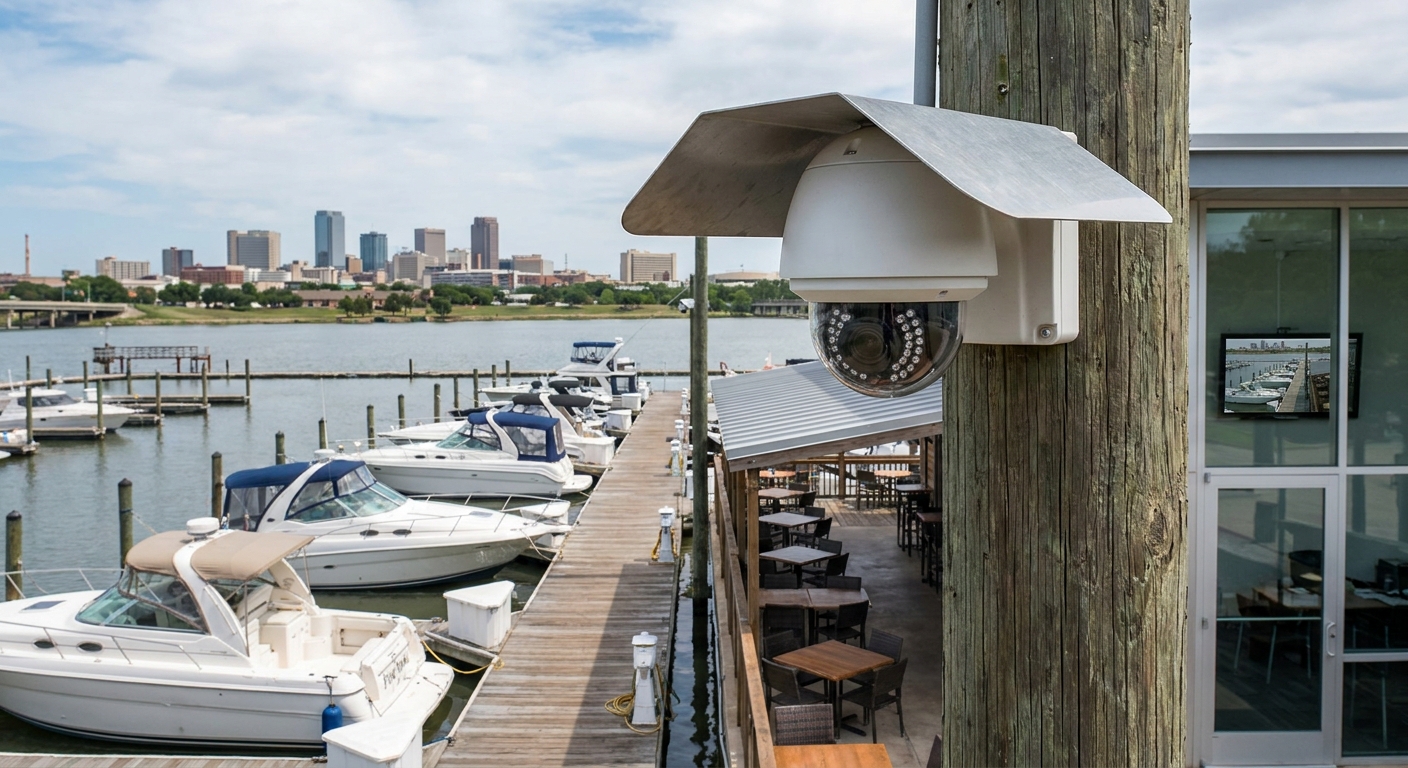
Operating Costs That Actually Make Sense
Hiring full-time security personnel is expensive. Alarm systems have recurring fees and false positives. Dock cameras, on the other hand, offer continuous coverage without the overhead.
Modern systems include motion detection, cloud storage, and mobile access—all at a fraction of what traditional security costs. You're not paying for bodies on-site. You're paying for coverage that doesn't sleep, doesn't miss details, and doesn't require benefits or scheduling. For waterfront businesses operating on tight margins, that's a line item that actually pays for itself.
What Your Documentation Should Include
Want to maximize the value of your surveillance system? You'll need more than just cameras. You need a strategy for how footage gets stored, reviewed, and retrieved when it's needed.
- Cloud backups with at least 30 days of retention
- Multiple camera angles covering every dock and entry point
- Motion-triggered alerts sent to your phone or security team
- High-definition resolution that captures faces and license plates
- Weatherproof housing rated for extreme conditions
Where Most Waterfront Operators Go Wrong
Installing cameras is step one. Maintaining them is where most businesses fall short. Lenses get dirty. Storage runs out. Angles shift after storms. If your system isn't checked monthly, it's not reliable.
Another common mistake? Poor placement. Cameras aimed at empty water or blocked by signage don't help. You need coverage where assets are stored, where people enter, and where disputes are most likely to occur. That means thinking through your layout before installation—not after an incident exposes a blind spot.
When DIY Becomes a Liability
Plenty of business owners try to handle surveillance setup themselves. That works—until it doesn't. Wiring fails. Storage limits get hit. Footage gets overwritten before it's needed.
If your waterfront operation involves significant inventory, customer traffic, or regulatory oversight, this isn't the place to cut corners. A professional installation ensures proper coverage, reliable storage, and systems that actually function when you need them. It's not about spending more. It's about spending smart.
Coverage That Works Around the Clock
Waterfront properties don't shut down at 5 p.m. Neither should your security. Night vision, infrared sensors, and motion-activated recording ensure your cameras are just as effective after dark as they are during business hours.
- Infrared capability for low-light environments
- Motion-triggered recording to reduce unnecessary footage
- Remote access so you can check feeds from anywhere
- Automated alerts for unusual activity or system failures
- Backup power systems to maintain coverage during outages
Integration With Existing Security Measures
Dock cameras work best when they're part of a broader security ecosystem. Pairing them with access control systems, alarm monitoring, and on-site personnel creates layers of protection that are harder to bypass.
If someone disables one system, the others still function. If one camera goes offline, others capture the gap. That redundancy is what keeps your operation protected even when something fails. And in waterfront environments where conditions are unpredictable, that redundancy isn't optional—it's standard practice.
How to Evaluate Camera Systems
Not all surveillance setups are created equal. Before you invest, you need to know what you're getting and whether it matches your operational needs. Here's what separates reliable systems from cheap installations that fail under pressure.
- Resolution quality—minimum 1080p for clear identification
- Storage capacity—cloud-based with scalable options
- Durability—IP66 rating or higher for waterfront exposure
- Mobile compatibility—live access via smartphone or tablet
- Vendor support—local technicians who can service equipment quickly
Maintenance That Keeps Systems Functional
Cameras exposed to water, salt, and weather degrade faster than indoor systems. Regular cleaning, firmware updates, and storage audits keep your setup running without gaps.
Most operators schedule quarterly checks. That's enough to catch issues before they escalate. Lenses get wiped. Housings get inspected. Software gets updated. It's boring work. It's also the difference between having footage when you need it and realizing too late that your system hasn't been recording for weeks.
What Happens When Cameras Fail
No system is foolproof. Hardware malfunctions. Storage corrupts. Cameras get vandalized. That's why backup plans matter just as much as the primary system.
- Secondary cameras covering critical zones
- Offsite storage to protect against physical damage
- Alerts for system failures or disconnections
- Vendor response plans for emergency repairs
- Written protocols for how to retrieve footage under time pressure
Protecting More Than Just Property
Waterfront businesses in Fort Worth operate in a competitive, high-risk environment. Cameras don't just prevent theft—they create documentation, reduce liability, improve safety, and give you the visibility to make faster decisions when conditions change. That's not surveillance for the sake of it. That's infrastructure.
If your operation depends on the water, your security system should reflect that reality. Coverage that works in all conditions. Footage that holds up in court. Systems that integrate with the way you actually run your business. Professionals specializing in commercial security hardware can help design integrated solutions for waterfront properties. For comprehensive protection beyond cameras, consider consulting with providers offering locksmith services to secure vulnerable access points. That's not a nice-to-have. That's the baseline for staying operational in a space where one bad incident can cost you everything.
Let’s Secure Your Waterfront Operation Together
We know how much is at stake when you run a business on the water. Let’s make sure your dock, your team, and your assets are protected with a camera system that works as hard as you do. If you’re ready to take the next step, give us a call at 888-477-5019 or get a free quote and let’s build a security plan that fits your needs.
‹ Back
Recent Posts
-
-
-
What Causes Commercial Alarm Systems in Fort Worth to Fail?
August 11, 2026
-
-